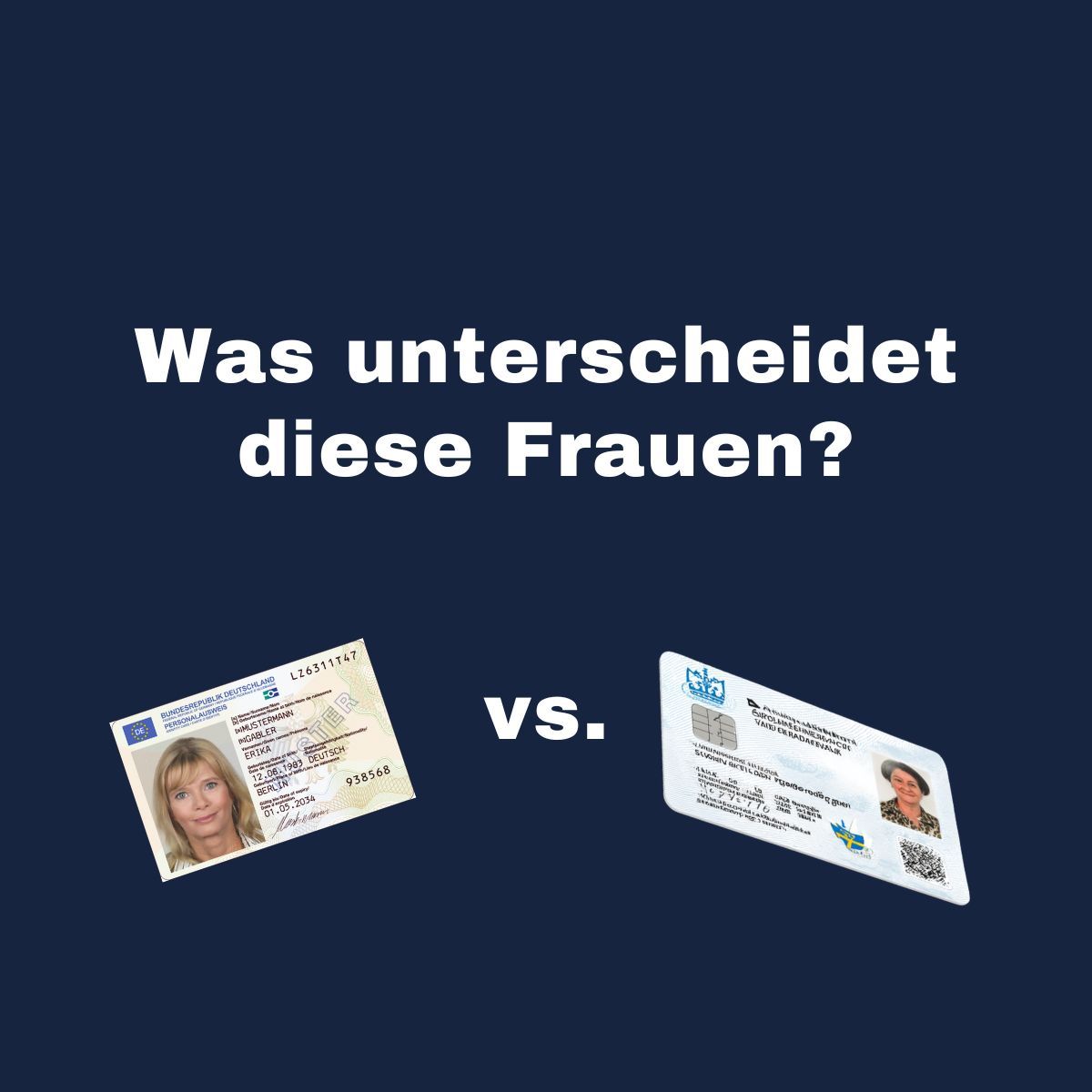
Digital identity (eID) is one of the keys to digitisation. In Denmark, Sweden and Finland, well over 90 percent of the population uses it today: for tax returns, re-registration, parental allowance, or starting a business, for example. Germany also has the technical foundation in place: the ID card with an online authentication function. But only 25% of Germans use it. Why?
The most important difference isn’t the technology. It’s the consistency with which it’s used. In Scandinavia, digital identity is the key to almost all important everyday services. Anyone interacting with the state, a bank or an insurer automatically uses the same trusted identity. That creates a real network effect: the more services are integrated, the more valuable the system becomes. And the more valuable it becomes, the more often it gets used.
Germany is missing exactly that effect.
The online ID function is technically secure, but often invisible in everyday life. On top of that, activation and use have long been seen as complicated — finding the PIN letter, installing the app, having your ID ready… far too much hassle. So the real lesson from Scandinavia is surprisingly simple: digital identity doesn’t catch on just because it exists. It catches on because it becomes indispensable — and easy.
Have you used your eID yet, and if so, for what?
Image: personalausweisportal.de + AI
Sources: OECD – Government at a Glance 2025
You can find this post on LinkedIn here: https://www.linkedin.com/feed/update/urn%3Ali%3Ashare%3A7461424605384032256